
Categories
Buying & Selling Real EstatePublished November 5, 2025
2025 NAR Profile of Buyers and Sellers Part 1

.png)
The 2025 NAR Profile of Home Buyers and Sellers: Part 1, Who’s Moving and Why
Every year, the National Association of REALTORS® releases its Profile of Home Buyers and Sellers, one of the most comprehensive looks at how Americans buy and sell homes.
The 2025 report spans more than 100 pages of data, covering everything from who’s moving and why to how people are financing their purchases.
To save you from sorting through it all, we pulled out the most interesting and relevant trends. Instead of one massive breakdown, we’re publishing a four-part series over the next month.
Here’s what’s ahead:
- Part 1: Who’s Moving and Why
- Part 2: What Buyers Want
- Part 3: Who’s Buying and Selling
- Part 4: How They’re Paying, and What to Expect
Let’s start with Part 1, where we dig into how homeownership habits have changed, why people are moving less often, and what life events are driving decisions in 2025.
Homeowners Are Staying Longer
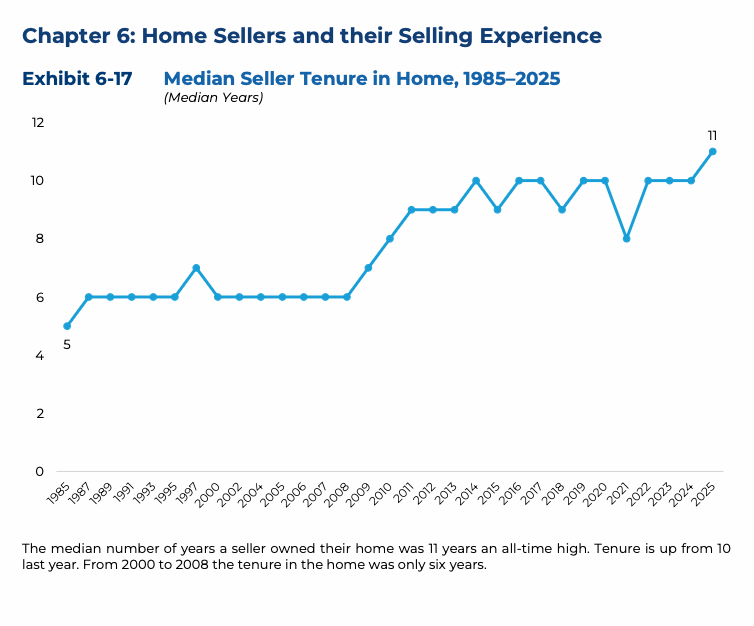
The typical homeowner now stays in their home for 11 years, up from around 6 years in 2008, the longest tenure on record.
This slowdown shows how much less frequently homes are turning over. Longer tenure means fewer listings each year, which directly contributes to low inventory and fewer total transactions nationwide.
Sellers Are Older
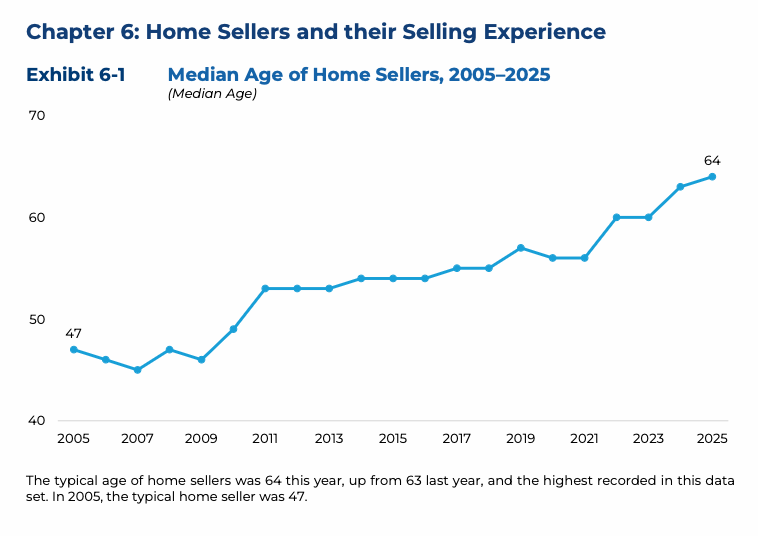
The typical home seller in 2025 is 64 years old, the oldest median age ever recorded in the NAR report.
A decade ago, the median seller was in their early 50s, showing how much longer homeowners are waiting before deciding to move. Today’s market is increasingly driven by older, long-term owners rather than first-time sellers or frequent movers.
Buyers Plan to Stay Longer
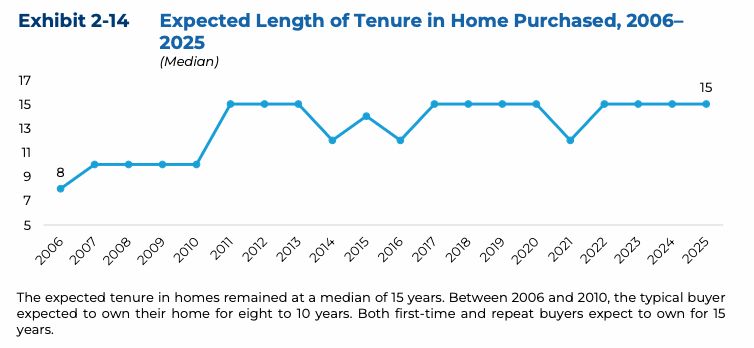
For years, buyers have said they plan to stay in their homes for about 15 years, and that hasn’t changed in 2025.
In reality, most end up moving sooner, around the 10- to 11-year mark.
That gap between expectation and reality shows that while people buy with long-term intentions, life events like job changes, family needs, or health usually come first.
Life Events Drive Moves
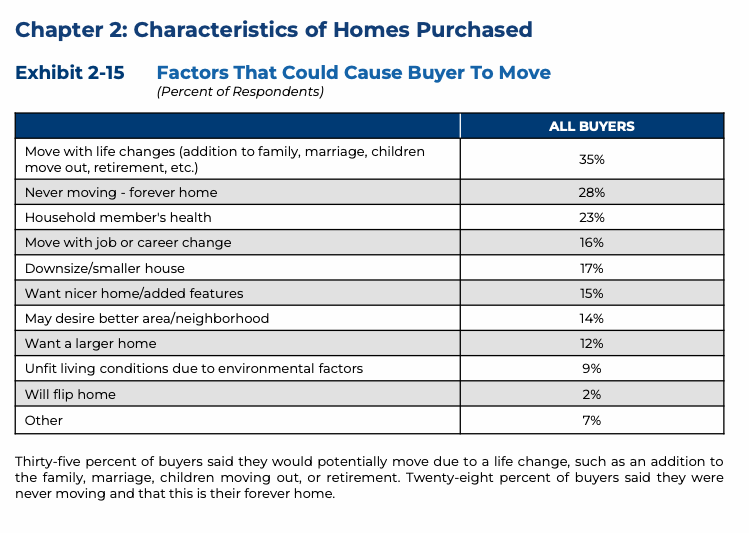
When asked what might make them move in the future, 28% said they don’t plan to move at all.
Among those who would consider it:
- 35% said a major life change such as marriage, having kids, children moving out, or retirement would be the reason.
- 23% said it would be tied to household members’ health.
- The rest cited job relocations and other practical needs.
The message is clear, most homeowners aren’t waiting for better rates or prices; they’ll move when life requires it.
The Search Still Takes About 10 Weeks

Despite all the market shifts of the past few years, the typical home search still lasts around 10 weeks, roughly two to three months from start to finish.
That consistency shows that buyers remain methodical. Even in competitive markets, people take time to compare homes, explore neighborhoods, and feel confident before committing.
If you’re planning a move, build that two-to-three-month search window into your timeline.
Next Week: What Buyers Want
In Part 2 of The 2025 Buyer & Seller Report, we’ll look at what today’s buyers value most, and what they’re willing to compromise on.
From neighborhood priorities to lifestyle trade-offs, we’ll break down how affordability and personal preferences are shaping decisions in 2025.
P.S. We’re saving some of the most surprising data for the later editions, including who’s actually buying and how they’re paying. Stay tuned.
or another way