
Categories
Buying & Selling Real EstatePublished November 19, 2025
2025 NAR Profile of Buyers and Sellers Part 2

.png)
The 2025 NAR Profile of Home Buyers and Sellers: Part 2, What Buyers Want
In Part 1 of our series, we explored who’s moving and why, and how life events, not market timing, are shaping today’s housing decisions.
This week, in Part 2, we’re shifting toward the next natural question:
What exactly are buyers looking for in 2025, and what are they willing to trade off to get it?
Each year, the NAR Buyer & Seller Report reveals a consistent truth:
buyers may compromise on the house, but rarely on the location.
People will adjust on price, size, style, or condition if it means living in the neighborhood that fits their lifestyle and keeps them close to family, community, or strong schools.
Affordability still matters, but instead of moving farther out, most buyers simply make the numbers work where they actually want to be.
This year’s data shows how buyers balance budget and belonging, what motivates them to move, and how different household types shape these decisions.
Neighborhood Quality Comes First
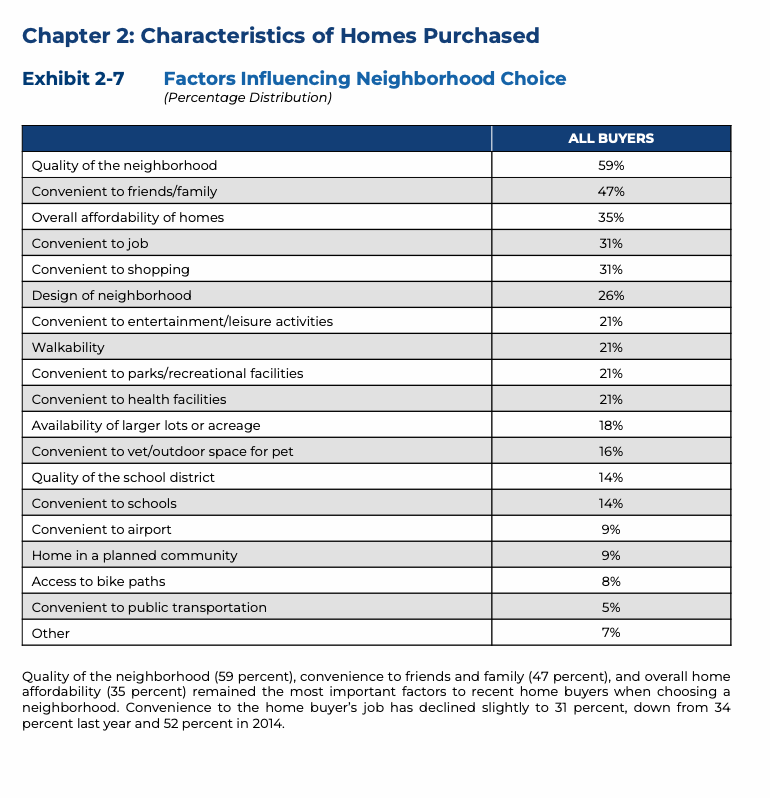
When choosing where to buy, neighborhood quality remains the top factor for most buyers.
People consistently prioritize the feel of the community, being near friends or family, and school quality over home size, finishes, or even commute times.
Even in a tight market, most would rather compromise on the home itself than settle in an area that doesn’t fit their lifestyle.
Location, not features, still drives the search.
Buyers Are Willing to Compromise… Just Not on Location
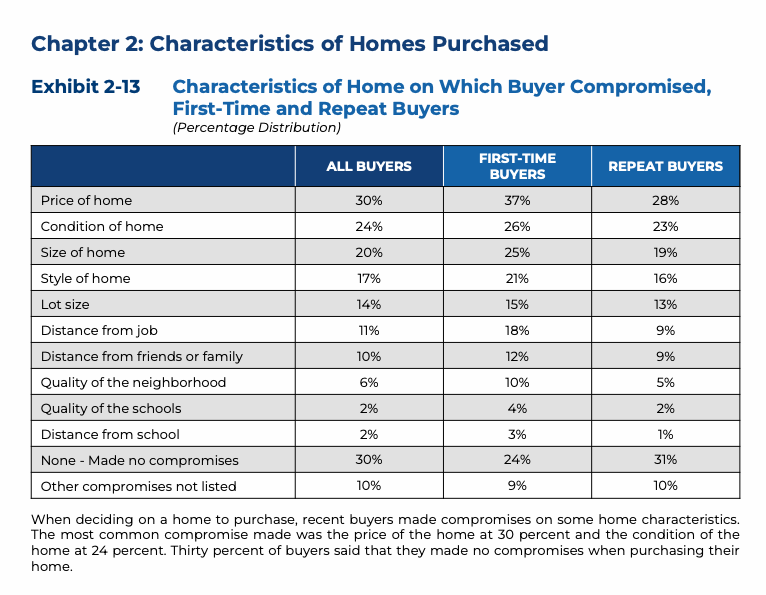
Affordability challenges continue in 2025, and buyers are adjusting accordingly.
Most are willing to compromise on
- price,
- condition, or
- size,
to remain in the areas they care about most.
This pattern shows that buyers stretch their budget, take on projects, or accept less space long before they give up proximity to family or a neighborhood they trust.
Why People Buy Hasn’t Changed
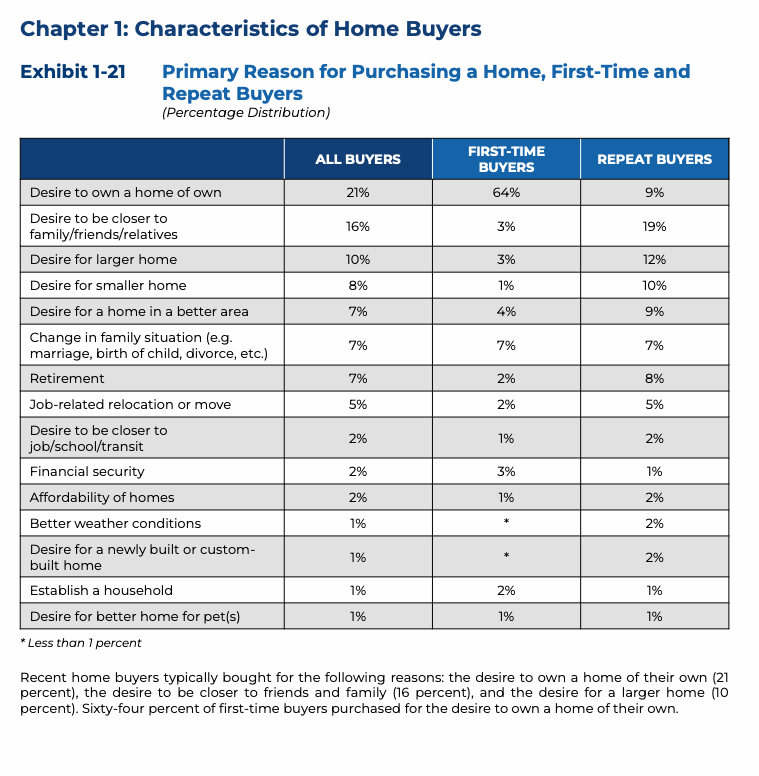
The core motivations for buying remain steady:
- First-time buyers primarily purchase because they want to own a home rather than rent.
- Repeat buyers are focused on being closer to friends and family.
These motivations, ownership and connection, haven’t changed, but the timing has.
With the typical first-time buyer now around 40 years old, people are waiting longer before making the move.
When they do, they enter the market with a clearer sense of what they need and a more long-term mindset.
The “Forever Home” Mindset Is Growing
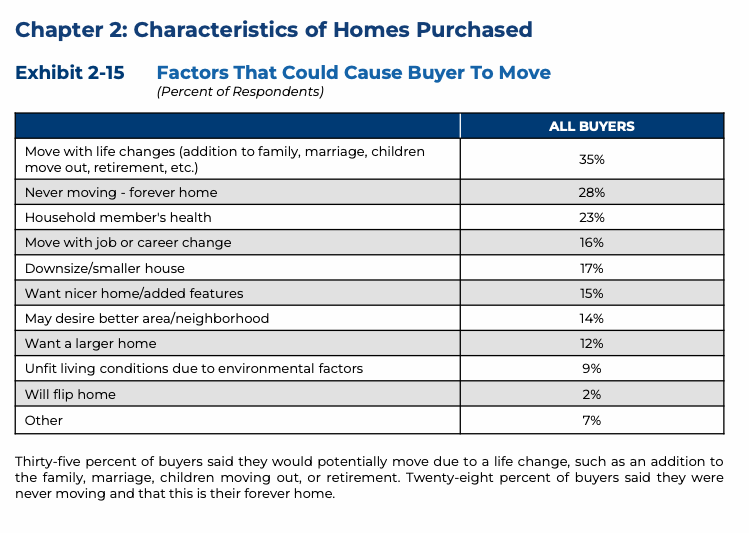
More buyers are planning to stay put once they buy.
This year, 28% said they don’t plan to move again, and many others expect to stay in their homes for well over a decade.
This shift reflects a more deliberate approach to buying:
buyers are choosing homes and neighborhoods they can grow into, not just pass through.
Decisions are longer-term, more intentional, and more connected to lifestyle stability.
The Changing Face of Homeownership
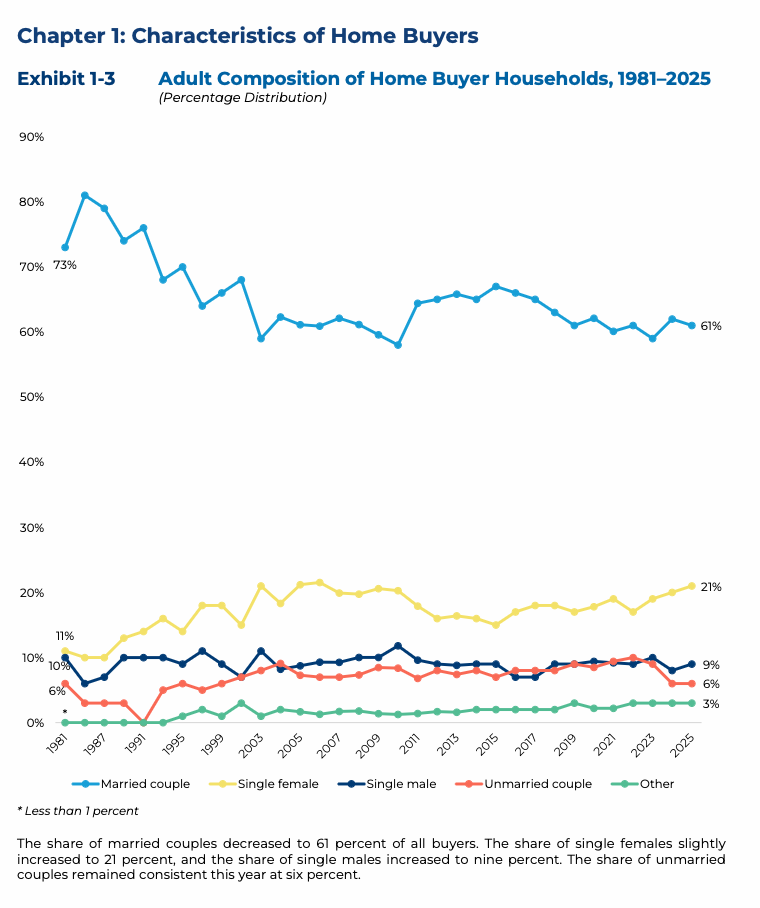
While married couples still make up the majority of buyers, the overall mix continues to diversify.
One of the most striking trends:
21% of buyers are single women, compared to 9% single men.
This gap has widened over time and highlights the growing role single women play in homeownership, often motivated by stability, independence, and long-term investment.
More multigenerational households and friends/siblings co-buying also contribute to the expanding definition of what a “homebuyer” looks like today.
Next Week: Who’s Buying and Selling
This week’s data shows how buyers weigh trade-offs and what drives their decisions.
Next week, in Part 3, we’ll focus on the people behind those decisions, which generations are buying, what their financial profiles look like, and how the market’s demographic landscape continues to shift.
P.S. Some of the most eye-opening insights are still ahead, including how wide the gap has grown between first-time and repeat buyers.
or another way